


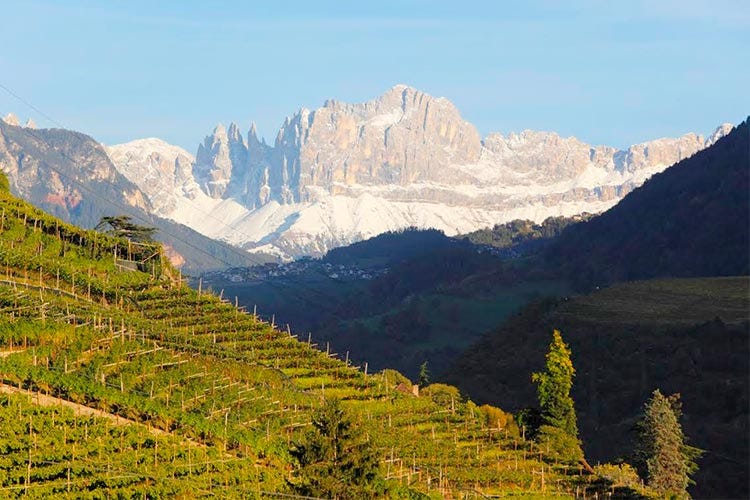
As has been well documented about the Italian region Alto Adige (aka South Tyrol or Südtirol), this northernmost Italian region spent a long time within the Austro-Hungarian empire prior to WWI, and is still heavily influenced by that culture. (On wine labels, for example, German text often appears above or alongside the Italian, as many residents speak German natively.) Thus, given the opportunity to speak with Judith Unterholzner – a local wine industry expert – about wines made with Lagrein, a red grape grown almost exclusively here, my first question was whether the winemakers see it as Italian or Austrian. “Lagrein is much more Austrian than Italian in influence,” she told me. “But this is more due the impact of the mountains and the alpine microclimate than the culture.”
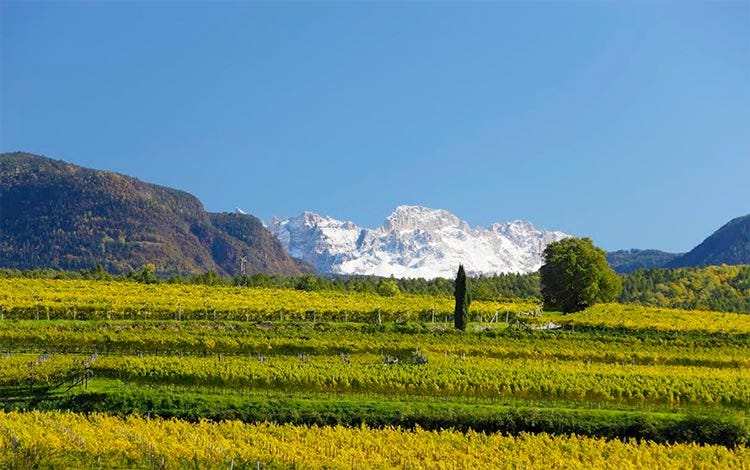
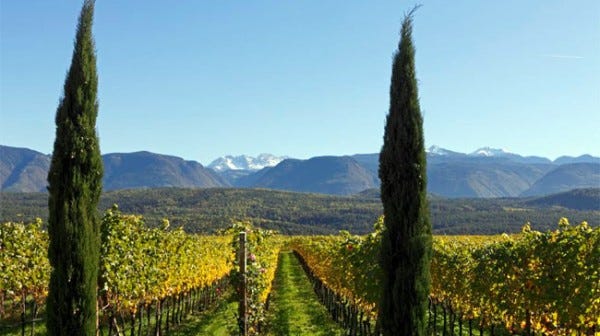
In other words, it’s all about terroir. Lagrein don’t care about wars, country borders, or any other man-made conflicts. It found a spot it likes, in a sometimes-unforgiving alpine climate, and it is thriving. In mountainous regions especially, there seems to be a strong bond between the climate and certain grapes, and Lagrein’s match with Alto Adige is no exception. We can come up with all sorts of other ways to describe terroir, but for me, that just about sums it up.
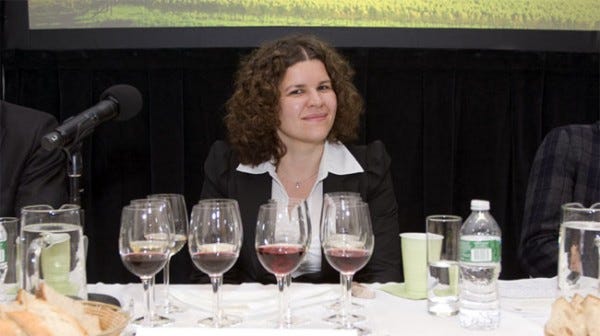
The grape, pronounced “lah-grine” (rhymes with wine), was traditionally used for blending – with the lighter Shiava, mostly – or as a rosato, due to its rugged, bitter nature, and only found its true calling in the early 1980s. “In the decades before,” said Unterholzner, “many consumers wanted lighter, easy-drinking red wines. Then there was an upswing in demand for structured red wines, and more oak influence… Lagrein fulfilled both requests, being full of character and developing fine spicy notes with oak aging. For locals of the region, this became our first serious red wine.”
Tasting through several Lagrein examples, I discovered a refreshing typicity, especially with the non-riserva wines (those aged in large oak casks or steel). Though each wine offered something different – a few featured earthy, rustic notes, for example – there were characteristics that clearly identified every bottle as Lagrein. Aromatically, a violet, floral bouquet recalls Syrah (a cousin), but only just. (La Cucina Italiana identified this scent as brunelle, a local name for wild orchids found in the region.) On the palate, bright plums and and blackberries lead the way, with black tea and more violet – or brunelle – notes. As it finishes, there’s an almost soapy aspect we’ll call lavender, lest you think it punishment for foul language, which it is most certainly not.
Perhaps unsurprisingly, the riservas, or wines aged in small oak barrels – which can cost significantly more – tend to relinquish some of this typicity. Oak softens the floral nature of the aroma, and though spicy flavors on the palate can add intrigue, they also obstruct those special orchids & plums. Riservas are, of course, made for longer aging (10 years or so), but I’m not sure, in this case, they consistently offer more excitement than the wines meant for everyday drinking.
Pairing-wise, Lagrein of course plays well with the foods of the region, including the legendary speck (smoked, cured ham), as well as beef or game stews. Polenta, mushrooms and root veggies are also common. I love it with fresh pork preparations too, such as grilled chops, roasted tenderloin, or stewed shoulder. Unterholzner suggests braised (in Lagrein, obviously) veal cheek on top of celery root puree.
Reviewing my Lagrein tasting notes, a few things are obvious:
1) Lagrein quality is consistent. Any bottle that’s 20-30 bucks is certain to be both delicious and representative of the region and variety. In fact, I’ve yet to try one in this price range that wasn’t at least good, with the exception of one bottle that was cooked. (Which was hardly Lagrein’s fault!)
2) There’s less certainty with riservas. Added winemaker intervention (mainly through oak) means that these wines may represent the region well, but could also taste like modern red wines of indeterminate origin. The best of these wines will allow Lagrein typicity to break through the oak after a decade or so, though this is hardly guaranteed.
Have you tried Lagrein? What do you think?
Did you enjoy this free story? If so, please consider a small donation to support future work like this. Even the smallest amount makes a big difference! Thanks for your consideration.